The Ultimate Showdown: Sigma 12Mm F 1 4 Dc C vs Leica Q3 Monochrom for 2026
Comparing a specialty ultra-wide prime lens to a high-end fixed-lens full-frame camera may seem like an apples-to-oranges exercise, but photographers often face this kind of choice in real life: buy a versatile, all-in-one camera built for black-and-white excellence, or invest in a fast ultra-wide prime to pair with an existing mirrorless body. This article examines the Sigma 12mm F1.4 DC C and the Leica Q3 Monochrom through the lens of 2026 buying priorities: image quality, real-world usability, ergonomics, workflow, and long-term value. The goal is practical guidance — who should consider each option, and why.
Quick framing: two different tools, two different philosophies
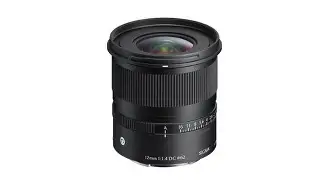
The Sigma 12mm F1.4 DC C is a purpose-built ultra-wide prime for APS‑C mirrorless systems. It’s aimed at photographers who need extreme field-of-view plus excellent low-light performance and sharpness across the frame — think astrophotography, interiors, real estate, and dramatic landscape shots. The Leica Q3 Monochrom, by contrast, is a premium, all-in-one monochrome camera with a fixed wide-angle lens and a full-frame sensor optimized for black-and-white image capture. It’s designed for photographers who prioritize the monochrome aesthetic, simplified workflow, and uncompromising in-camera image quality.
Detailed review: Sigma 12mm F1.4 DC C
Product category: Ultra-wide prime lens for APS‑C mirrorless systems (Contemporary lineup).
Optical character and performance: The Sigma 12mm F1.4 DC C is built around a very wide angle of view; on APS‑C bodies that translates to roughly an 18mm full-frame equivalent, making it one of the widest fast primes available for that sensor size. The f/1.4 maximum aperture is unusually fast for this focal length and is a key selling point: it allows for faster shutter speeds in low light, improved subject isolation when appropriate, and better control of exposure during astrophotography.
Sharpness and rendering: In practical shooting, the Sigma tends to deliver strong center sharpness wide open, with corners improving markedly if stopped down one to two stops. The contemporary line prioritizes a balance of optical quality, size, and weight, and Sigma’s modern optical formulas aim to keep coma and astigmatism controlled — a major benefit when shooting stars. Chromatic aberration is generally manageable in raw processing, and the lens exhibits a pleasing microcontrast that works well for landscape textures and architectural lines.
Autofocus, handling, and build: The autofocus system on this lens (when paired with a modern mirrorless body) is typically quick and silent enough for general-purpose use. The physical build follows the Contemporary ethos: solid but not overbuilt, with weather-sealing available in later mounts or versions. It’s compact compared to full-frame ultra-wides, making it a good candidate for travel kits where weight matters.
Real-world use cases
- Astrophotography — wide field, fast aperture for capturing Milky Way scenes without excessively long exposures
- Landscape and environmental architecture — expansive vistas, dramatic foreground-to-background separation at close distances
- Interior and real estate — exaggerated perspective that makes small spaces appear larger; careful composition required to avoid distortion
- Creative environmental portraiture — when the wide angle is used intentionally for context and atmosphere
Compatibility note: This lens requires a compatible APS‑C mirrorless body. Photographers who already own a capable mirrorless camera can add this lens to expand creative options at relatively modest cost compared to stepping up to a new full-frame system.
Pros & cons — Sigma 12mm F1.4 DC C
- Pros:
- Extremely wide field of view for APS‑C bodies — great for immersive landscapes and interiors
- Very fast f/1.4 aperture for low-light work and astrophotography
- Relatively compact and lightweight for an ultra-wide prime
- Good sharpness center-to-corner when stopped down
- More affordable than equivalent full-frame ultra-wides
- Cons:
- Designed for APS‑C — limited use on full-frame without cropping or vignetting
- Extreme perspective requires careful composition to avoid subject distortion
- Filter use can be tricky with large front elements; specialized holders may be required
- Not a one-camera solution — needs a body to function
Detailed review: Leica Q3 Monochrom
Product category: Premium fixed-lens full-frame monochrome camera.
Looking for the best Cameras & Photography deals on Amazon?
Shop Amazon →Design philosophy and image pipeline: The Leica Q3 Monochrom carries forward Leica’s long-standing monochrome program: removing the color filter array from a high-quality full-frame sensor to capture luminance information directly. The result is an image file with higher apparent resolution, cleaner high-ISO performance, and tonal subtleties that are difficult to reproduce with grayscale conversions of color sensors. Paired with Leica’s finely tuned fixed wide-angle lens, the Q3 Monochrom is an integrated system that prioritizes photographic quality and a streamlined black-and-white workflow.
Image quality and tonal rendition: Where the Q3 Monochrom shines is tonal depth and micro-contrast. Because the sensor records luminance at every pixel, images show exceptional detail rendition and smoother gradations in midtones and shadows. Photographers who make black-and-white images as a primary mode — street, portrait, architectural, and fine art — will appreciate the way highlights roll off and how texture is rendered.
Usability and ergonomics: Leica’s cameras are known for their tactile controls, compact ergonomics, and focus on photographer experience. The Q3 Monochrom follows that tradition: simple dials, a responsive viewfinder, and a fixed-lens design that removes lens selection from the decision chain. This simplicity encourages an attention to composition and light. For documentary or street shooters who want a no-fuss monochrome output straight out of camera, this is a compelling option.
Workflow implications: Choosing a monochrome sensor changes the typical workflow. There are no color balance decisions in-camera; post-processing is focused on contrast, tone, and local adjustments. File sizes and processing needs vary depending on the sensor resolution, but many users report faster, more intuitive editing for black-and-white work because the image is already captured in luminance—the creative choices become about mood and contrast rather than color correction.

Real-world use cases
- Street and documentary photography — fast, decisive shooting with direct black-and-white output
- Fine art and portrait work — emphasis on texture, form, and tonal relationships
- Low-light solo work — superior high-ISO performance and noise characteristics for night shooting
- Editorial and exhibition work — images that require minimal post conversion and big prints with strong tonal fidelity
Pros & cons — Leica Q3 Monochrom
- Pros:
- Unmatched monochrome image quality from a full‑frame sensor
- Simplified, dedicated black-and-white workflow with excellent tonal rendition
- Integrated high-quality wide-angle lens and finely tuned camera ergonomics
- Strong build quality and a compact form relative to full-frame systems with interchangeable lenses
- Excellent high-ISO performance compared to demosaiced color sensors
- Cons:
- Fixed lens — lack of lens interchangeability limits compositional tools and focal-length flexibility
- Premium price point — generally significantly more expensive than buying a single lens like the Sigma
- No native color capture — not suitable for photographers who need color work
- Workflow lock-in: once committed to monochrome capture, color projects require a separate camera
Head-to-head comparison
| Category | Sigma 12mm F1.4 DC C | Leica Q3 Monochrom |
|---|---|---|
| Product type | Ultra-wide prime lens (APS‑C) | Full-frame fixed-lens monochrome camera |
| Best for | Astrophotography, landscapes, interiors, creative wide-angle work | Dedicated B&W street, documentary, fine art, low-light monochrome photography |
| Compatibility | Needs a compatible APS‑C mirrorless body | Standalone camera — no lens changes required |
| Flexibility | High (use on any compatible body; pair with multiple bodies) | Limited (fixed focal length, fixed monochrome capture) |
| Low-light capability | Very good (f/1.4 aperture), depends on camera body sensor | Exceptional (monochrome sensor advantages, full-frame performance) |
| Portability | Light and compact lens for APS‑C | Compact for a full-frame camera, very portable as a single unit |
| Cost (relative) | Affordable to mid-range (lens only) | High-end / premium (camera body with integrated lens) |
| Ideal buyer | Photographers who already own a mirrorless system and want ultra-wide capability | Photographers who prioritize monochrome and want an all-in-one, highest-quality solution |
Buying guide — how to choose between these two
Deciding between a high-quality lens and a premium monochrome camera starts with clear priorities. Below are the key decision points and practical tips to help select the right tool for specific needs.
1. Define the creative goal
If the primary goal is a signature black-and-white look with minimal post-processing and maximal tonal quality, a monochrome camera like the Leica Q3 Monochrom is purpose-built for that creative result. If the goal is to capture wide vistas, interiors, or the night sky with a fast aperture and the flexibility to change lenses later, the Sigma 12mm is the practical choice.
2. Consider system ownership and ecosystem
Buyers who already own a mirrorless system (Sony, Fujifilm, Canon R, etc.) will likely benefit more from adding the Sigma lens to expand creative options without changing bodies. The Sigma represents a lower incremental cost and integrates into an existing lens ecosystem. Leica’s offering is a single-system investment: it excels at its mission but does not replace a full interchangeable-lens kit.
3. Budget and total cost of ownership
Factor in accessories. For the Sigma lens, budget for a high-quality tripod, maybe a specialized filter system, and the camera body itself if not already owned. For the Leica Q3 Monochrom, consider cost relative to its integrated convenience, plus any peripherals such as batteries, memory, and a good workflow for large monochrome files. Leica cameras are often priced at a premium; weigh that cost against the value of immediate monochrome excellence.
Find top-rated Cameras & Photography products at great prices.
See Deals →4. Workflow and post-processing
Monochrome cameras simplify certain aspects of workflow because the image is captured in luminance. For photographers who prefer to shoot and deliver black-and-white work quickly, this is a big advantage. The Sigma route preserves color capture and versatility; converting to monochrome is an option, but the approach and final image may differ subtly from a native monochrome capture.
5. Practical shooting considerations
Ask these practical questions before buying:
- Will the work require color images? If yes, the Leica Monochrom is not suitable as a primary camera.
- How important is focal length flexibility? A fixed-lens solution requires adapting shooting style to the lens.
- Is travel weight a major concern? Both options are portable, but the Sigma plus a small APS‑C body can create an extremely lightweight kit.
- Does the intended work require long exposures or star-sharp corners at very wide apertures? The Sigma’s f/1.4 and optical design are strong points for night sky work.
6. Try before you buy
Whenever possible, test each option in a real-world scenario. Rent the Leica Q3 Monochrom for a weekend street shoot or spend an overnight in a dark sky location with a rented Sigma 12mm on a trusted body. Real shooting experience is the best way to discover whether fixed-lens monochrome discipline or an ultra-wide, fast prime fits a photographer’s style.
Final recommendations — who should buy which
Choose the Sigma 12mm F1.4 DC C if:
- There is already an APS‑C mirrorless body to pair it with (or the buyer is willing to buy one).
- The photographer needs an ultra-wide, fast lens for landscapes, interiors, or astrophotography.
- Budget and system flexibility matter — the lens adds capability without locking the buyer into a single-camera workflow.
- Color photography or lens interchangeability is important.
Choose the Leica Q3 Monochrom if:
- The primary creative output is black-and-white photography and tonal quality is the top priority.
- The buyer values a compact, high-performing, integrated tool that reduces decision fatigue and speeds a monochrome workflow.
- Budget allows for a premium, one-body solution and the fixed focal length suits the intended photographic practice (street, documentary, fine art).
Conclusion
Both the Sigma 12mm F1.4 DC C and the Leica Q3 Monochrom are exceptional in their intended domains. The Sigma offers an accessible way to add an extreme ultra-wide, fast-aperture capability to a mirrorless kit — a practical, creative expansion for landscape, interior, and astrophotography work. The Leica Q3 Monochrom, meanwhile, provides an integrated, uncompromising monochrome experience: top-tier tonal rendition, streamlined workflow, and an immediacy that many black-and-white specialists prize.
Ultimately, the decision is less about which product is “better” in absolute terms and more about which tool aligns with a photographer’s goals: versatility and ultra-wide reach versus dedicated monochrome excellence. Photographers who value system flexibility and wide-angle exploration will find a lot to love in the Sigma 12mm. Those devoted to black-and-white expression, simplicity, and the highest in-camera monochrome quality will be drawn to the Leica Q3 Monochrom. Choosing between them is a deliberate act of defining the work one wants to make.