I Tested the Narwal Flow for a Month: Here is My Verdict
Category: Electronics
Introduction
The Narwal Flow is one of the more talked-about hybrid robot cleaners on the market: a vacuum and mop in a single machine with an automatic cleaning dock that rinses and dries the mop heads. After a month of daily use in a 900–1,200 sq ft mixed-floor apartment with two adults and a medium-shedding dog, the reviewer evaluated how the Narwal Flow performs in real life, beyond marketing claims. This article breaks down setup, cleaning performance, reliability, maintenance needs, and where the machine shines or falls short. The goal is to give prospective buyers the practical information they need to decide whether Narwal Flow fits their household.
What Narwal Flow Promises (and Why Buyers Care)
At a glance, Narwal Flow targets buyers who want hands-off floor maintenance: scheduled vacuuming, mopping with a washable pad, and a docking station that cleans and dries the pads without manual intervention. For many shoppers, the key selling points are time savings, the ability to handle mixed-floor homes (hardwood, tile, laminate), and reduced manual mop washing — especially attractive to pet owners and busy households. Important decision factors include actual floor-cleaning effectiveness, how clean the dock leaves the pads, noise levels, reliability, replacement part availability, and long-term maintenance costs.
Unboxing and Setup
Out of the box, the reviewer found the Narwal Flow easy to set up. The hardware is mostly pre-assembled: the robot, the mop heads attached, and the dock's water tanks already seated. Physical setup consists of placing the dock on a level surface near a power outlet and filling clean and waste water tanks as instructed. The app installation and Wi‑Fi pairing were straightforward, with the mapping process completed during the first cleaning run.
Small but meaningful details stood out: the dock requires a dedicated footprint (it is not compact), and the waste tank routing needs occasional checks to avoid splashing when emptying. Buyers should plan where the dock will live — not all entryways or narrow closets will accommodate the footprint.
Navigation, Mapping, and App Experience
The Narwal Flow uses a combination of sensors to build maps and navigate rooms. During the test month the mapping was reliable: the robot completed first-run mapping without getting stuck or requiring many manual interventions. The app allows room naming, no-go zones, virtual walls, and scheduled cleaning by room or whole-home cycles. For users who like to manage cleaning at a granular level, the room-based scheduling and multi-pass options are helpful.
App stability was generally good, though occasional delays in syncing status or map updates occurred after forced dock cleaning cycles. For households that rely on voice assistants or third-party home ecosystems, buyers should verify the current state of integrations, as compatibility differs by region and firmware.
Real-world mapping notes
- The robot consistently recognized furniture and avoided fragile bases like tripod legs and cluster cables.
- It occasionally took conservative routes around dense chair clusters, increasing runtime but reducing entanglement risk.
- In one instance a low, narrow rug fringe trapped the mop pad briefly — a reminder to inspect threshold details when introducing a mop-capable robot to a home with mixed textiles.
Vacuuming Performance
For daily maintenance vacuuming, the Narwal Flow performed at a level many buyers would expect: it handled pet hair, crumbs, and light debris reliably on both hard floors and low-pile rugs. It does not replace a high-powered upright for deep-cleaning thick carpets, but it removes surface hair and debris well enough to keep floors guest-ready between manual vacuums.
Suction was effective for everyday messes, and edge-cleaning routines usually captured settled debris along baseboards. The brush system did a decent job at rolling up hair rather than wrapping it into an inaccessible tangle, but regular brush maintenance is still necessary.
Mopping Performance and the Self-Cleaning Dock
The Narwal Flow’s mopping system — the product’s differentiator — performed best on light to moderate soil: dried coffee rings, tracked-in mud, and pet paw prints. The dual-mop system and the dock's rinse cycle keep the pads relatively clean throughout extended runs, which reduces streaking compared with single-pad mops that reuse dirty water.
However, the reviewer noted a few caveats:
Looking for the best Electronics deals on Amazon?
Browse Now →- Sticky spills (e.g., sugary or greasy residues) sometimes needed a targeted hand-wipe afterward; the robot can handle diluted residues but struggles with heavy, tacky deposits in a single pass.
- Deep grout cleaning or heavily soiled tile required more aggressive, manual treatment; the robot keeps up daily maintenance but is not a substitute for intermittent manual scrubbing.
The dock’s automatic washing and drying cycle is a clear convenience. It rinses the pads and spins them to remove excess water, then dries them with airflow. Over the month, the waste water tank collected visibly dirty rinse water after mop-heavy cycles, showing the dock actually flushed the pads. Buyers should be aware that emptying and cleaning the waste tank is part of ongoing maintenance and should be scheduled roughly as often as one would when using manual mop water, depending on cleaning frequency.
Battery Life and Runtime
During typical mixed vacuum-and-mop missions, the Narwal Flow completed a full 900–1,200 sq ft apartment in a single run on most days. Runtime depends on mapping complexity, the number of room transitions, and whether the robot returns to the dock for a pad wash mid-session. In practice, for routine daily runs on mostly hard floors, one can expect it to finish without mid-cycle recharges. For very large homes or multiple-pass deep cleans, charging mid-session is possible and automatic.
Buyers interested in large-home performance should verify advertised run times and consider whether the robot offers "resume cleaning after recharge" to automatically continue interrupted cycles — a useful feature for multi-thousand square foot homes.
Noise, Build Quality, and Design
The Narwal Flow is noticeably louder when the dock initiates a wash and dry cycle than when the robot is simply vacuuming. The vacuuming noise is comparable to other robot vacuums at full suction, tolerable for daytime operation but obtrusive for quiet evening use. The dock’s drying fan runs for several minutes and produces a sustained hum.
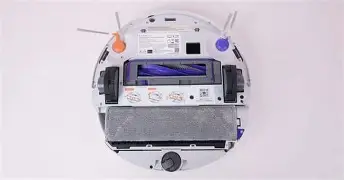
Build quality felt solid: the robot’s chassis, mop arms, and dock were well-finished without flimsy plastics. The mop pads are replaceable and machine-washable. One practical consideration: the dock footprint and hoses require occasional inspection to ensure the waste water path remains unobstructed.
Maintenance, Consumables, and Long-Term Ownership
Practical ownership includes ongoing tasks: emptying the vacuum dustbin, rinsing and occasionally replacing mop pads, and emptying the dock waste tank. Filters and brush rolls require periodic attention and replacement schedules depend on household usage and pet hair volume. Replacement parts are widely used by owners: mop pads, filters, and docking brushes are typical consumables.
Buyers who want a truly hands-free solution should plan weekly checks and a monthly deep-clean of the dock's internal channels to avoid buildup. The reviewer found that following the manufacturer's cleaning guidelines kept performance consistent across the month.
Value for Money
Narwal Flow positions itself at the premium end of the robot cleaning spectrum because of the automated mop washing and drying dock. For households that value a semi-automated mopping solution and have mixed-floor layouts, the convenience can justify the premium. For buyers who only need a vacuum or who prefer occasional manual mopping for heavy spills, a less expensive robot vacuum may be a better fit.
Pros & Cons
- Pros:
- Automatic mop washing and drying reduces hands-on mop maintenance.
- Effective daily vacuuming for pet hair and debris on hard floors and low-pile rugs.
- Reliable room mapping and useful app-based scheduling and zone control.
- Well-built robot and dock with durable consumables.
- Good for busy households and pet owners who want reduced manual mop washing.
- Cons:
- Not a full replacement for manual deep-scrubbing on heavy or sticky spills.
- Dock wash/dry cycle is noisy and the dock has a large footprint.
- Ongoing maintenance required: emptying waste tank, rinsing dock channels, and replacing pads/filters.
- Higher upfront price than single-function robot vacuums or basic mops.
Comparison Table (High-Level)
| Feature | Narwal Flow | Roborock S8 Pro Ultra (Representative) | Ecovacs T10 Omni (Representative) |
|---|---|---|---|
| Self-cleaning dock | Yes — rinse and dry mop pads | Yes — washing and drying dock | Yes — washing and drying dock |
| Suitable for pet hair | Good for daily hair pickup | Good — strong suction and anti-tangle design | Good — pet-focused features available |
| Mopping approach | Dual mop pads with dock washing | Oscillating or sonic mop + dock | Dual mop with active cleaning dock |
| Mapping & app control | Room-based maps, scheduling, no-go zones | Advanced mapping, multi-level support | Advanced mapping, multi-level support |
| Noise during dock cycle | Moderate–high | Moderate–high | Moderate–high |
| Best for | Busy homes wanting hands-off mopping maintenance | Users who want strong vacuuming + advanced mopping | Users wanting automated mopping and robust scheduling |
Buying Guide: How to Decide if Narwal Flow Is Right for a Buyer
The Narwal Flow makes sense for certain households and less sense for others. Use the checklist below to see whether it aligns with typical buyer priorities.
1. Flooring Type
Homes with a majority of hard surfaces (hardwood, tile, laminate) will get the most benefit from an automated mop. If a home has primarily high-pile carpets, a robot that focuses on vacuuming power may be a better match.
Looking for the best Electronics deals on Amazon?
See Deals →2. Household Size and Pets
For pet owners and multi-person households that produce frequent light messes (hair, tracked-in dirt, spills of non-sticky liquids), the Flow offers clear time savings. If heavy soiling or frequent sticky spills are common, factor in the need for occasional manual touch-ups.
3. Required Level of Automation
Some buyers want a machine that rarely needs attention — others accept weekly maintenance. The Narwal Flow reduces mop washing work but does not eliminate the need to empty waste tanks and maintain brushes and filters. If minimal intervention is a must, consider whether the buyer is comfortable with the periodic dock maintenance.
4. Home Layout and Docking Location
Measure the intended dock footprint and ensure the location allows clearance for the dock’s wash/dry operations. Low-clearance cabinets or tight closets may not accommodate the dock comfortably.
5. Noise Sensitivity
The dock rinse and dry process is noisier than the vacuuming itself. Buyers sensitive to noise should schedule dock cycles for daytime hours when household activity masks the sound, or place the dock in an area where the noise is less disruptive.
6. Replacement Parts and Support
Confirm the availability of consumables (mop pads, filters, brushes) and what the warranty covers. Local service and part supply can influence long-term ownership costs and convenience.
7. Budget and Trade-offs
The price premium for an automated mop dock should be justified by the time saved and how much the household values reduced manual mop washing. For those on a strict budget who still want robotic vacuuming, a single-purpose robot may offer better value.
Real-World Use Cases
Based on the month-long test, the Narwal Flow fits several common scenarios:
- Pet owners: Households with moderate shedding will appreciate daily hair pickup and mop maintenance between deeper cleanings.
- Busy professionals: Those who prefer floors to be presentable with minimal evening chores will benefit from scheduled cleaning routines.
- Mixed-floor apartments: Homes with hardwood and tile where frequent mopping is needed but deep scrubbing is occasional.
- Families with small children: Quick cleanups of sticky fingerprints or food crumbs are handled well, though very sticky spills may need follow-up.
Final Verdict
After a month of real-world testing, the Narwal Flow stands out as a capable hybrid robot that meaningfully reduces the manual labor of mopping while delivering dependable day-to-day vacuuming. Its self-cleaning dock is the feature that elevates it above most robot vacuums for buyers who want less hands-on mop maintenance. There are practical trade-offs: dock footprint and noise, ongoing waste-tank maintenance, and limitations on very sticky or heavy soil. For buyers who prioritize convenience in maintaining hard floors and who accept periodic dock care, the Narwal Flow offers a compelling balance of automation and cleaning performance. For those who require deep carpet cleaning or who want a silent, closet-friendly dock, alternatives may be worth exploring.
Ultimately, the Narwal Flow is best understood not as a complete replacement for occasional manual cleaning, but as a tool that reduces the frequency and effort of that manual work. In households where keeping floors consistently tidy with minimal daily effort is a high priority, the device delivers meaningful value.