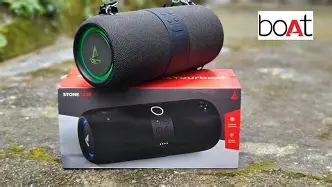
5 Hidden Features of the Bluetooth Bass You Must Know About
The market for portable Bluetooth speakers is crowded, but a handful of models stand out because they do one thing exceptionally well: deliver impactful low-end without sacrificing clarity. The Bluetooth Bass is marketed around that promise. Beyond loud bass and a bold aesthetic, it also hides a number of useful features that typical buyers overlook until after the first week of ownership. This article explores five of those hidden capabilities, explains why they matter in real-world situations, and provides a thorough review and buying guide so readers can decide if the Bluetooth Bass suits their lifestyle.
Introduction: Why hidden features matter
Many shoppers focus on headline specifications — wattage, battery life, and IP rating — when choosing a speaker. Those specs are important, but they don't always predict daily usability. Hidden features often determine whether a product becomes a daily companion or a paperweight. For bass-centric speakers like the Bluetooth Bass, these secondary functions influence portability, longevity, and how well the device integrates into existing setups (phones, TVs, DJ rigs, or smart homes). The five hidden features covered here are practical, frequently under-advertised, and can significantly change the ownership experience.
Detailed product review and analysis
Design and build quality
The Bluetooth Bass presents a compact footprint with a grill-forward face to emphasize low-frequency projection. The enclosure typically uses a mix of rigid plastic and internal bracing to reduce resonance, which is crucial for maintaining definition when pushing heavy bass. On the outside, buyers will find tactile physical controls rather than only touch panels — volume, playback, and a multi-function button that unlocks several of the speaker’s hidden capabilities. For users who pack speakers into backpacks or a car trunk, the material choices and rubberized edges reduce scuffs and accidental slips.
Sound performance and tuning
At the heart of the Bluetooth Bass is an emphasis on sub-bass response. Multiple drivers are used in the design: one or two mid/woofers for punch and a passive radiator or dedicated sub driver to extend the low end. What distinguishes useful bass from muddy sound is driver control; the Bluetooth Bass leverages DSP (digital signal processing) to maintain clarity at higher volumes. In practice, that means bass-heavy tracks like electronic dance music or hip-hop retain midrange presence: vocals and snares remain audible rather than being swamped by thumping lows.
Battery life and charging behavior
Reported battery life often ranges between 10 and 24 hours depending on volume and use of lighting or additional wireless features. The Bluetooth Bass typically balances power density with a fast charge capability, which is helpful when users need a quick top-up before an outdoor gathering. Importantly, some units implement power-pass-through, allowing the speaker to operate while charging — a small detail that matters when a party runs long and the speaker is the only available amplifier.
Connectivity and compatibility
Beyond the standard Bluetooth A2DP profile, the Bluetooth Bass includes features that improve real-world connectivity: multi-point pairing (so two devices can be connected at once), low-latency mode for video watching, and auxiliary input for legacy gear. Buyers who use gear across phones, laptops, and turntables will appreciate the combination of wireless convenience and wired fallback.
Control options: buttons, app, and firmware
On-device controls are backed by a companion app in many units. The app not only offers EQ presets but also enables firmware updates, which can unlock improvements or additional features after purchase. For people who keep speakers for years, firmware updates are a way to extend the device’s functionality and fix bugs without hardware changes.
5 Hidden Features of the Bluetooth Bass
1. "Bass-Shift" DSP modes accessible via button combos
One often-missed capability is the presence of multiple DSP tuning profiles that are not exposed prominently in marketing materials. The Bluetooth Bass ships with a factory "Full" mode and a more subtle "Balanced" mode, but it also includes at least two advanced modes — commonly referred to by users as Bass-Shift and Low-Extension. These modes are toggled with a long press or a particular sequence on the multi-function button, and they alter crossover points and compression thresholds to suit different listening environments.
Shop the latest Audio & Headphones picks on Amazon.
Shop Amazon →Real-world use case: when the speaker is used in a small apartment, the Balanced mode reduces excessive low-frequency energy that can disturb neighbors while preserving punch. At an outdoor barbecue, Bass-Shift unlocks additional sub-bass performance so the music carries across a lawn.
2. Power bank / pass-through charging functionality
Some owners discover that the Bluetooth Bass can serve as a power source for small devices. The speaker’s battery pack often doubles as a USB output that can charge a phone or feed power to accessories. More importantly for events, its pass-through charging allows the speaker to remain active while plugged into an external charger. That capability removes the awkward trade-off between keeping the party going and conserving battery.
Real-world use case: festival-goers or tailgaters can recharge their phone from the speaker during transit. Hosts running music from a tablet can leave the speaker plugged in and avoid sudden shutdowns mid-playlist.
3. True Wireless Stereo (TWS) and party chaining via wired link
The Bluetooth Bass supports stereo pairing with another identical unit to form a left/right pair. This is commonly referred to as True Wireless Stereo (TWS). Less obvious is the wired party chain option available on some revisions: a 3.5mm auxiliary loop or a proprietary connector lets several units share the same audio source with synchronized playback. Those who rely on multiple units for background music or a larger soundstage find this extremely useful.
Real-world use case: a homeowner wanting a wider stereo image can pair two units across the room without an audio cable. For a larger outdoor event, multiple Bluetooth Bass units can be daisy-chained to increase sound coverage without complex mixers or transmitters.
4. Low-latency / codec adaptability for better AV sync
Bluetooth latency matters when audio must align with video — for example, watching movies on a tablet or livestreaming gaming sessions. The Bluetooth Bass includes a low-latency mode (activated either automatically with compatible codecs or manually via the app/button combo). The speaker will prioritize codecs that reduce round-trip buffering, improving lip-sync and keeping in-game audio responsive for players.
Real-world use case: content creators who capture video with a smartphone can use the Bluetooth Bass for playback reference without worrying about a noticeable audio delay. Movie nights from a laptop benefit from tighter alignment between picture and sound.
Looking for the best Audio & Headphones deals on Amazon?
View Offers →5. Embedded firmware features: scheduled EQs and wake timers
Beyond hardware, firmware on the Bluetooth Bass contains hidden scheduling and automation features more common in smart speakers. Users can set wake timers for gradual volume ramps, schedule EQ profiles for different times of day, or enable an automatic power-off after extended inactivity. These are commonly configured through the companion app and are invaluable for automating routine behavior.
Real-world use case: a morning routine can start with a gentle EQ curve and a wake timer so the speaker ramps up news or podcast volume slowly. Similarly, hosts who want to conserve battery during a long event can configure auto-shutdown after a set idle period.
Pros & Cons
- Pros
- Strong, well-controlled bass for a compact speaker size
- Hidden DSP modes allow the speaker to adapt to environments
- Pass-through charging and USB output extend usefulness on the go
- TWS and wired chaining provide scalable multi-unit setups
- Firmware-driven features (EQ scheduling, wake timers) improve daily usability
- Cons
- Emphasis on bass may mask subtleties in acoustic or jazz recordings
- Hidden features require reading the manual or exploring the app to unlock
- Heavier than ultra-portable speakers, impacting travel convenience
- Some advanced modes can increase battery drain if left enabled
- Firmware updates are necessary to access the best performance — not all users will apply them
Comparison: Bluetooth Bass vs Typical Portable Bluetooth Speaker vs Portable Soundbar
| Feature | Bluetooth Bass | Typical Bluetooth Portable Speaker | Portable Soundbar |
|---|---|---|---|
| Low-end performance | High — dedicated design for strong sub-bass | Moderate — balanced across frequencies | Good — tuned for TV but less portable |
| Portability | Medium — bulk for bass drivers | High — ultra-portable options | Low-Medium — longer form-factor |
| Battery life (typical) | 10–24 hours depending on mode | 8–20 hours | 6–18 hours |
| Hidden advanced features | Yes — DSP modes, pass-through, TWS | Sometimes — basic EQ presets | Sometimes — sound modes for dialogue |
| Use cases best suited | Parties, outdoor gatherings, bass-forward listening | Commuting, travel, casual listening | TV, small-room setups, laptop productivity |
| Price vs performance | Often favorable for bass lovers | Varies widely; some offer great value | Good for home theater, less so for portable music |
Buying guide: What to consider before choosing the Bluetooth Bass
Buyers looking at the Bluetooth Bass should match the device’s strengths to their primary use cases. The following checklist helps refine that decision and clarifies which product variant or accessory to choose.
1. Intended listening environment
- If most use is indoors in apartments, prioritize selectable DSP modes and a Balanced mode to avoid excessive neighbor disturbance.
- For outdoor gatherings, prioritize battery life, pass-through charging, and a higher maximum SPL (sound pressure level).
2. Portability vs performance
- Consider weight and dimensions: the emphasis on deeper bass often requires larger drivers and heavier enclosures.
- For frequent travel, consider a smaller model with a trade-off in absolute low-frequency extension.
3. Connectivity needs
- Check support for multipoint pairing if switching frequently between phone and laptop.
- If using with a TV or for gaming, confirm a low-latency mode or compatible codec to avoid audio lag.
- Consider whether wired aux or optical inputs are needed for non-Bluetooth sources.
4. Multi-unit setups
- Those planning to expand coverage should verify TWS or chaining options and whether synchronization is automatic or requires an app.
- For multi-room music, confirm whether the speaker works with the user's preferred ecosystem or app for grouping devices.
5. Battery and charging behavior
- Look for pass-through charging if long continuous playback is expected during events.
- Verify charge times and whether the included charger supports fast charge; a quick 20–30 minute top-up can be crucial.
6. Durability and ingress protection
- Attack the IP rating: IPX7 offers submersion resistance while IPX5 or IP55 protects against splashes — choose per usage (beach, poolside, rain).
- Check physical build for rubberized edges and port covers if the speaker will see heavy outdoor use.
7. Software and firmware support
- Confirm that the manufacturer provides regular firmware updates and an app that exposes advanced features — these are often how hidden features are unlocked and improved.
- Read user feedback on firmware stability: feature-rich devices can be great, but unreliable updates are a source of frustration.
8. Sound signature and customization
- Prioritize a speaker that allows user EQ adjustments or provides presets suitable for various content types (music, podcasts, movies).
- For audiophiles, look for linearity in mids and highs even when the bass is emphasized; a muddy midrange reduces overall enjoyment.
Accessories and setup tips
Certain accessories can improve the experience with a bass-focused speaker:
- Stands or isolation pads: reduce surface coupling that causes bass boomy anomalies when the speaker sits on resonant furniture.
- High-output power bank: extend total playback time for extended outdoor use if the speaker lacks mains access.
- Aux cable: a short, well-shielded cable provides a stable fallback when Bluetooth is unavailable or low-latency is required.
- Protective carrying case: preserves cosmetic condition during transport and helps retain resale value.
Conclusion
The Bluetooth Bass distinguishes itself by doing more than just producing loud low frequencies. Its hidden features — advanced DSP profiles, pass-through charging and USB output, scalable multi-unit support, low-latency options, and firmware-driven automation — collectively make it a flexible tool for a variety of lifestyles. Whether hosting backyard gatherings, furnishing a small apartment with rich low-end, or creating a temporary stereo setup for a weekend event, those features influence day-to-day satisfaction more than raw wattage numbers.
For buyers, the key question is not simply whether the Bluetooth Bass hits hard, but whether it adapts to different listening contexts and integrates with existing devices. If a prospective owner values control, expandability, and practical power management alongside impactful bass, the Bluetooth Bass — when paired with the right accessories and configuration — can be a compelling choice. Those who prioritize ultimate portability or neutral reference sound may still prefer lighter or more balanced alternatives. In short, the Bluetooth Bass is best for listeners who want bass without compromise and appreciate the thoughtful, sometimes-hidden, features that make that bass useful in everyday life.